


At iLEAD Exploration, we have always believed that education should be without limits. This month, our incredible learners took that philosophy quite literally—taking their research all the way beyond Earth’s atmosphere to the International Space Station (ISS)!
From growing sustainable building materials in space to testing agricultural resilience in microgravity, our student researchers are tackling real-world challenges that could redefine human exploration on the Moon, Mars, and right here on Earth.
Here is a look at how iLEAD Exploration learners are leading the charge into the cosmos through the DreamUp to Space initiative.
Team Mycotecture: Growing Habitats in Microgravity
What if future astronauts didn’t have to carry heavy building materials to space, but could instead grow their own habitats?
That visionary question is at the heart of Team Mycotecture, an innovative student research team featuring talented learners from iLEAD Exploration. They designed a cutting-edge experiment investigating:
How does microgravity affect the structural integrity of mycelium-based biocomposite materials?
Mycelium—the dense root structure of fungi—is one of the most promising organic materials for sustainable, eco-friendly structures. If mycelium biocomposites can withstand the harsh conditions of space, they could become the building blocks for lunar shelters and Martian bases.
While astronauts aboard the ISS National Lab test these fungal structures in orbit, Team Mycotecture is diligently conducting parallel ground control tests on Earth to observe and record comparative data. Their dedication to scientific rigor and bio-engineering is paving the way for sustainable deep-space architecture.
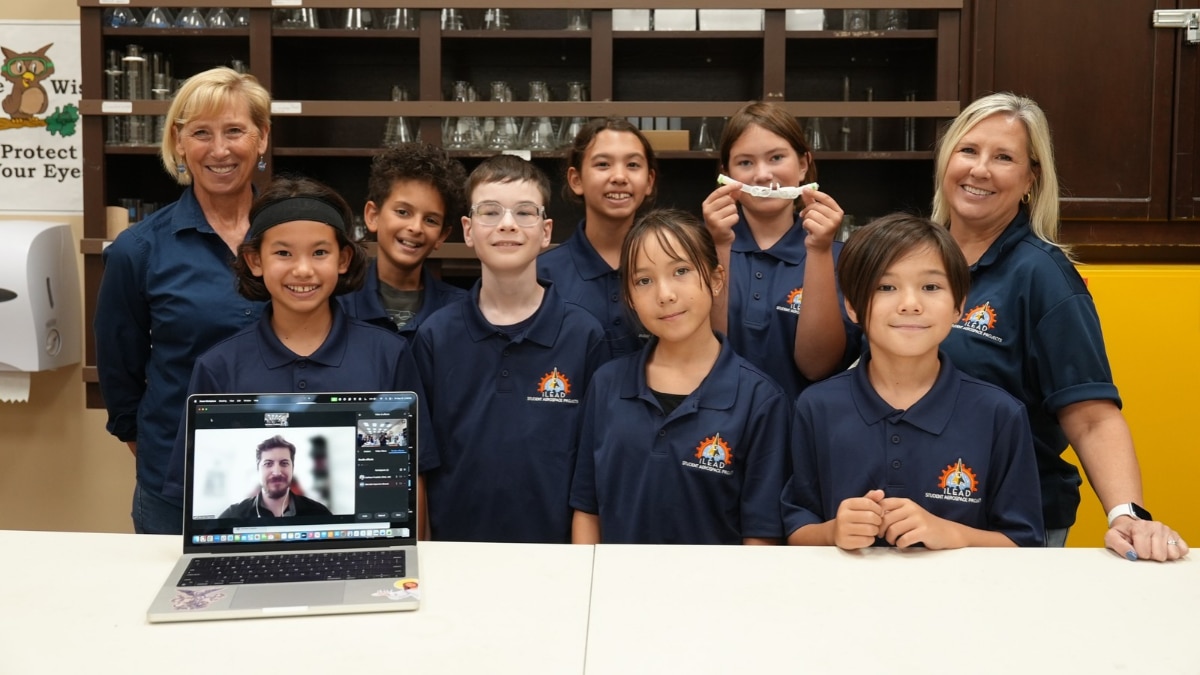

Team Alfalfa: Cultivating the Future of Space Agriculture
Long-term space missions require sustainable, nutrient-rich food sources that can thrive under microgravity conditions. Stepping up to the plate, iLEAD Exploration learners joined forces with peers to form Team Alfalfa, working to answer:
What is the impact of microgravity on the germination of three Medicago sativa (alfalfa) variants—UCAL2250, Ameristand 901TS, and Sholty?
After spending late September fine-tuning and optimizing their experiment for spaceflight, Team Alfalfa’s research officially blasted off into low-Earth orbit. As astronauts aboard the ISS oversee the seed germination cycle in microgravity, our learners are managing synchronized ground control tests here on Earth to measure differences in growth rates, viability, and root formation.
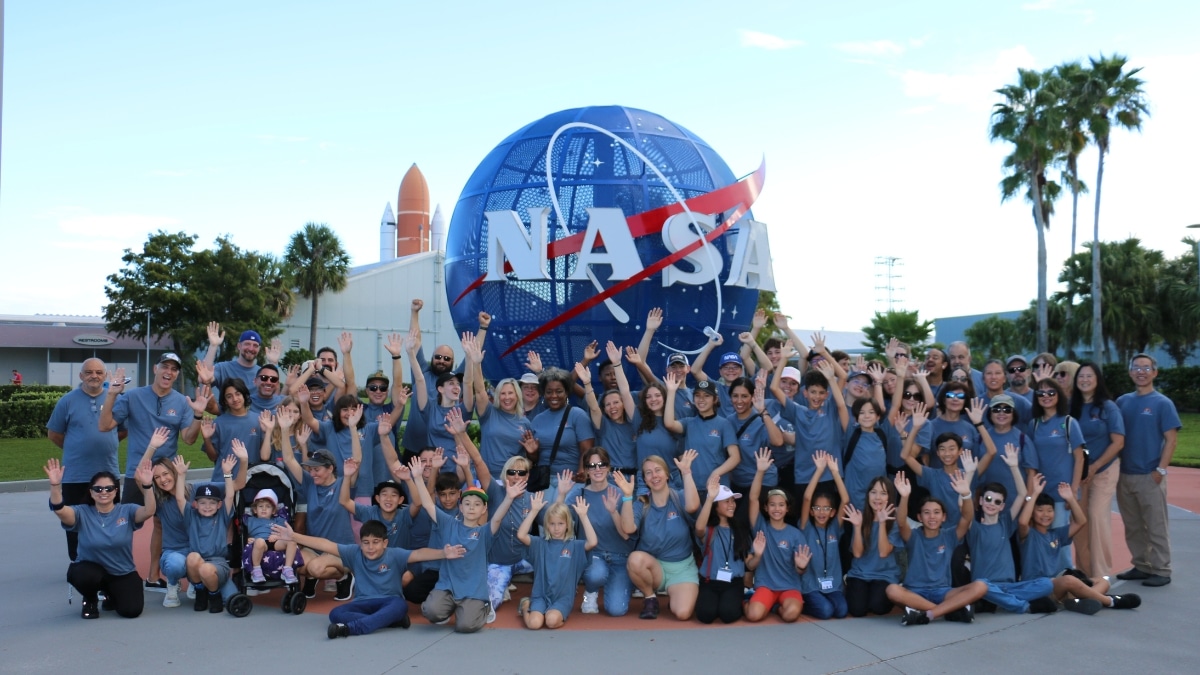
From the Launchpad to the Stage: An Unforgettable October
October has been a whirlwind of milestone moments for our young scientists:
-
October 13 — The Launch: Both Team Mycotecture and Team Alfalfa watched their months of hard work, design revisions, and laboratory preparation blast off into the night sky, headed directly for the ISS National Lab.
-
October 15 — The DreamUp to Space x STARward STEM Space Conference: Just two days after launch, our student researchers took the stage before a live audience to present their hypotheses, methodology, and experimental designs. They spoke with poise, deep scientific insight, and unmistakable passion for discovery.
Empowering the Next Generation of Explorers
Hands-on, inquiry-led projects like DreamUp to Space reflect the heart of what learning looks like at iLEAD Exploration. Our students aren’t just reading about science in textbooks; they are designing real-world payloads, running controlled experiments alongside NASA astronauts, and actively contributing to humanity’s next giant leap.
We want to extend our heartfelt congratulations to the brilliant learners of Team Mycotecture and Team Alfalfa, as well as the facilitators, families, and mentors who encouraged their curiosities every step of the way.
The sky is no longer the limit—it’s just the beginning.
Stay tuned for upcoming updates as we await the return of data and findings from the ISS!